

Introduction
If you’ve What Is a Target URL spent any time learning about SEO, digital marketing, paid advertising, or website optimization, you’ve probably come across the term target URL. While it may sound technical, the concept is actually quite simple. A target URL is the exact web page that a visitor is directed to after clicking a link, advertisement, email button, search engine result, or call-to-action.
Understanding target URLs is important because they directly affect user experience, search engine optimization, conversion rates, and overall website performance. Whether you’re running a personal blog, an eCommerce store, or a business website, choosing the right target URL can make the difference between a visitor leaving immediately or becoming a customer. What Is a Target URL
In this guide, we’ll explain everything you need to know about target URLs in a straightforward way. We’ll cover their purpose, how they work, why they matter for SEO, common mistakes to avoid, and best practices for using them effectively.
What Is a Target URL
A target URL is the specific destination webpage that a hyperlink points to. Whenever someone clicks a link—whether it’s in Google Search, an email newsletter, a social media post, or an online advertisement—they are taken to the target URL. What Is a Target URL
Think of it like entering an address into your GPS. The road you travel is the link, while the destination is the target URL. Without a proper destination, users would never reach the information they’re looking for.
For example, imagine your online store sells running shoes. Instead of sending visitors to your homepage, your advertisement could send them directly to: What Is a Target URL
This page becomes the target URL because it’s exactly where users land after clicking.
Target URLs can point to: What Is a Target URL
- Homepage
- Product pages
- Blog articles
- Landing pages
- Contact pages
- Category pages
- Download pages
- Registration forms
Choosing the correct destination helps users quickly find relevant information without unnecessary navigation.
Why Target URLs Matter
Target URLs play a significant role in both user experience and website performance. Every click represents an opportunity to deliver exactly what visitors expect. What Is a Target URL
When users click a link, they already have a purpose in mind. Maybe they’re looking for information, comparing products, or planning to make a purchase. Sending them to the most relevant page increases satisfaction and reduces frustration. What Is a Target URL
From a business perspective, target URLs help improve conversions. Visitors who land on a highly relevant page are more likely to complete desired actions such as buying a product, signing up for a newsletter, or filling out a contact form. What Is a Target URL
Search engines also evaluate user behavior. If people quickly leave a page because it doesn’t match their expectations, search engines may interpret that as a poor user experience. Relevant target URLs help reduce bounce rates and improve engagement metrics.
How a Target URL Works
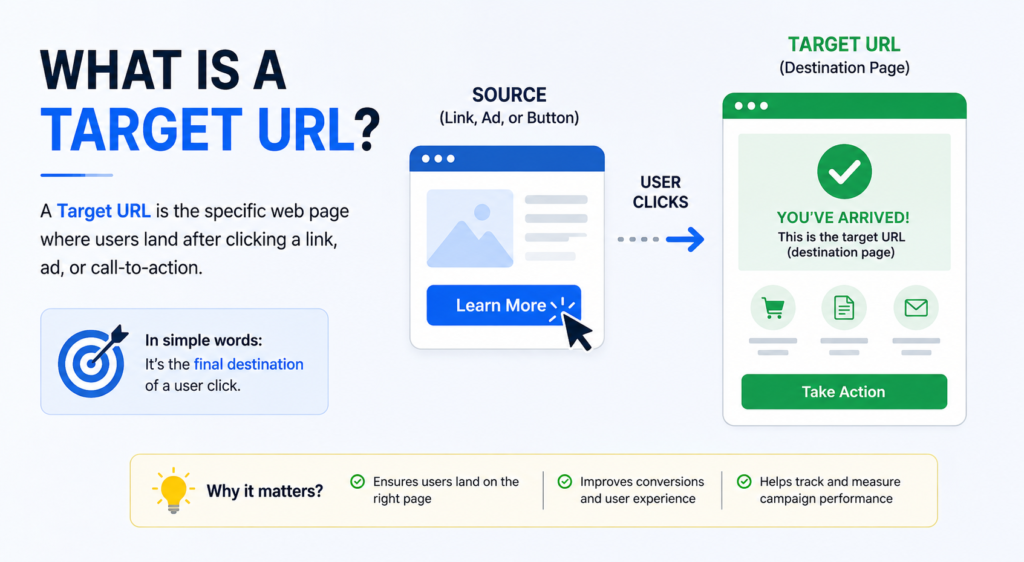
The process What Is a Target URL behind a target URL is surprisingly simple, even though it powers nearly every click on the internet.
First, someone creates a hyperlink. This could appear in a website menu, an advertisement, an email, or social media content. Behind the scenes, the link contains a destination URL.
When a visitor clicks the link, the browser sends a request to the web server hosting that webpage. The server then delivers the requested page back to the visitor’s browser. What Is a Target URL
If everything is configured correctly, the user immediately lands on the intended page.
However, problems can occur if the target URL is incorrect. Broken links, deleted pages, or poor redirects can lead users to 404 errors or unrelated content, creating a negative experience. What Is a Target URL
Target URL vs Landing Page
Many beginners confuse target URLs with landing pages. Although they’re closely related, they are not exactly the same thing.
A target URL is simply the destination address.
A landing page is the webpage where visitors actually arrive after clicking a link. What Is a Target URL
Sometimes the landing page and target URL are identical. Other times, redirects may send users elsewhere before reaching the final destination.
The original target URL exists, but the visitor ultimately lands on another page.
Understanding this distinction becomes especially important when analyzing advertising campaigns or SEO performance.
Target URLs in SEO
Search engine optimization relies heavily on proper target URLs. Every internal link, backlink, and search result points users toward a destination page. What Is a Target URL
When optimizing for SEO, each target URL should focus on a specific topic. This helps search engines understand the page’s purpose and rank it appropriately.
Well-optimized target URLs usually include:
- Relevant keywords
- Clean URL structure
- Fast loading speed
- Mobile-friendly design
- Helpful content
- Proper internal linking
Clear URLs are easier for both users and search engines to understand.
Search engines also evaluate whether internal links consistently point toward high-quality target pages. Strong internal linking distributes authority throughout a website and improves crawlability.
Target URLs in Digital Marketing
Target URLs are essential across nearly every digital marketing channel.
In Google Ads, every advertisement sends users to a chosen target URL. Selecting the wrong page often results in lower Quality Scores and reduced conversions. What Is a Target URL
Email marketing campaigns also depend on effective target URLs. If an email promotes a specific product, readers should land directly on that product page instead of the homepage.
Social media marketing works the same way. Every post, bio link, or sponsored advertisement should direct users toward the most relevant destination.
Affiliate marketers also rely on target URLs to track conversions accurately. Many affiliate links include tracking parameters that help measure clicks, sales, and commissions without changing the final destination.
The more relevant the target URL, the more effective the campaign becomes. What Is a Target URL
Best Practices for Choosing a Target URL
Selecting the right target URL requires careful planning rather than simply linking to the homepage.
Always match the destination with user intent. If someone searches for “best hiking backpacks,” sending them directly to your backpack category page makes far more sense than sending them to your homepage. What Is a Target URL
Keep URLs clean and readable whenever possible. Short, descriptive URLs improve trust and are easier to share across platforms.
Avoid unnecessary redirects. Multiple redirects increase loading time and can reduce tracking accuracy.
Monitor your URLs regularly to ensure none become broken after website updates or redesigns. Dead links create poor user experiences and may negatively affect SEO. What Is a Target URL
Whenever possible, optimize the destination page before promoting it. Fast loading speeds, clear calls-to-action, and helpful content maximize visitor engagement.
Common Mistakes to Avoid
Many website owners unintentionally reduce their marketing effectiveness by making simple target URL mistakes.
One common mistake is sending every visitor to the homepage regardless of what they clicked. This forces users to search for information that should already be available. What Is a Target URL
Another issue involves broken links. Website redesigns often change page URLs, leaving old links pointing to non-existent pages.
Some marketers use URLs filled with unnecessary parameters that look confusing and reduce user trust.
Others forget to update tracking links after changing website structure, causing inaccurate analytics reports.
Finally, failing to optimize destination pages can waste advertising budgets. Even a perfect advertisement cannot perform well if the target URL leads to a slow or irrelevant webpage.
Examples of Target URLs
Understanding target URLs becomes much easier with real-world examples.
Imagine an online clothing store running different campaigns.
If the advertisement promotes winter jackets, the target URL should be:
example.com/winter-jackets
If an email announces a holiday sale, the target URL could be:
example.com/holiday-sale
If a blog article discusses SEO tools, the internal links might point toward:
example.com/seo-tools-guide
Each destination matches the visitor’s expectations, creating a smoother browsing experience.
Even simple website navigation uses target URLs. Every menu item points visitors toward specific pages like About, Services, Pricing, or Contact.
How to Optimize Target URLs for Better Performance
Optimization begins long before users click a link.
Choose descriptive page names that clearly communicate the content. Search engines appreciate meaningful URLs, and users are more likely to trust them.
Ensure every destination page loads quickly. Even a delay of a few seconds can increase abandonment rates.
Use HTTPS for secure browsing. Secure websites build confidence while also providing SEO benefits.
Include relevant keywords naturally within the URL when appropriate, but avoid keyword stuffing.
Regularly review analytics to determine which target URLs receive the most traffic, highest engagement, and strongest conversion rates. Continuous monitoring allows you to improve underperforming pages over time.
Finally, maintain consistent internal linking throughout your website. Strong internal links help search engines discover pages while guiding visitors toward valuable content.
Conclusion
A target URL may seem like a small technical detail, but it plays a major role in SEO, digital marketing, website usability, and online conversions. Every hyperlink, advertisement, social media post, and email depends on sending users to the right destination.
By choosing relevant, well-optimized target URLs, you improve user experience, increase engagement, strengthen SEO performance, and maximize marketing results. Instead of directing visitors to generic pages, always consider what they expect to see after clicking.
Whether you’re managing a personal blog, building an online business, or running large advertising campaigns, understanding how target URLs work is a valuable skill. With thoughtful planning, clean URL structures, and relevant destination pages, you can create a smoother journey for visitors while helping your website achieve better long-term success.
You May Read Also:

