

Introduction
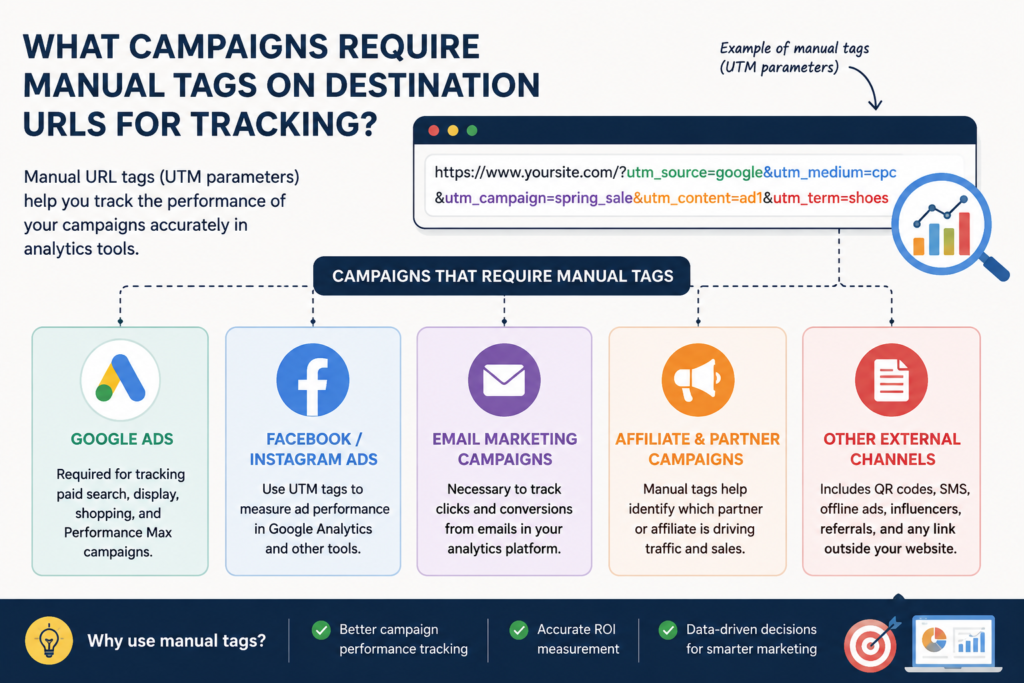
If you’ve ever wondered what campaigns require manual tags on destination URLs for tracking, you’re not alone. This is one of the most common questions marketers ask when trying to measure where their website traffic comes from. While analytics platforms have become smarter over the years, they still can’t identify every traffic source automatically. That’s where manual URL tagging comes into play.
Manual tagging allows marketers to add specific tracking parameters to their destination URLs. These parameters help analytics tools identify the exact campaign, traffic source, marketing medium, and even individual advertisements that brought visitors to a website. Without proper tagging, valuable marketing data can easily become confusing or disappear into generic traffic categories. What Campaigns Require Manual Tags on Destination URLs for Tracking
In this guide, we’ll explain which campaigns require manual tags, why they’re important, how they work, and the best practices you should follow to keep your marketing reports accurate. Whether you’re running email campaigns, social media promotions, influencer marketing, or paid advertisements, understanding manual URL tagging can significantly improve your campaign analysis. What Campaigns Require Manual Tags on Destination URLs for Tracking
Understanding Manual URL Tags What Campaigns Require Manual Tags on Destination URLs for Tracking
Manual URL tags are small pieces of information added to the end of a website link. They’re commonly known as UTM parameters, and they’re designed to pass campaign information directly into analytics platforms such as Google Analytics.
These tags don’t change the destination page itself. Instead, they provide additional context about where a visitor clicked the link. For example, instead of simply knowing someone visited your homepage, your analytics can tell you they arrived from a Facebook summer sale campaign using a sponsored post.
The most commonly used UTM parameters include: What Campaigns Require Manual Tags on Destination URLs for Tracking
- utm_source
- utm_medium
- utm_campaign
- utm_term
- utm_content
Together, these values create a detailed picture of your marketing efforts, allowing you to compare campaigns with confidence.
Why Manual URL Tagging Matters What Campaigns Require Manual Tags on Destination URLs for Tracking
Many marketers assume analytics software automatically recognizes every visitor source. While that’s partially true, automatic tracking has limitations. Some traffic sources don’t pass enough information for analytics tools to identify them accurately.
Manual tags solve this problem by giving every campaign a clear identity. Instead of seeing traffic grouped under “Direct” or “Referral,” you’ll know exactly which email, advertisement, or social media post generated the visit.
Another major advantage is consistency. Businesses often run campaigns across multiple platforms at the same time. Proper URL tagging makes comparing campaign performance much easier because every visit is categorized correctly.
Finally, manual tagging improves return-on-investment reporting. When every click is tracked accurately, marketing budgets can be allocated more effectively based on real performance rather than estimates.
What Campaigns Require Manual Tags on Destination URLs for Tracking What Campaigns Require Manual Tags on Destination URLs for Tracking
Several marketing campaigns should always use manual URL tagging because automatic tracking either doesn’t exist or isn’t reliable enough.
Email Marketing Campaigns
Email marketing is one of the biggest examples. Email links usually don’t pass referral information correctly, causing traffic to appear as direct visits.
By adding manual tags, marketers can identify: What Campaigns Require Manual Tags on Destination URLs for Tracking
- Newsletter traffic
- Promotional emails
- Welcome sequences
- Holiday campaigns
- Customer retention emails
Without tagging, measuring email performance becomes extremely difficult.
Organic Social Media Posts
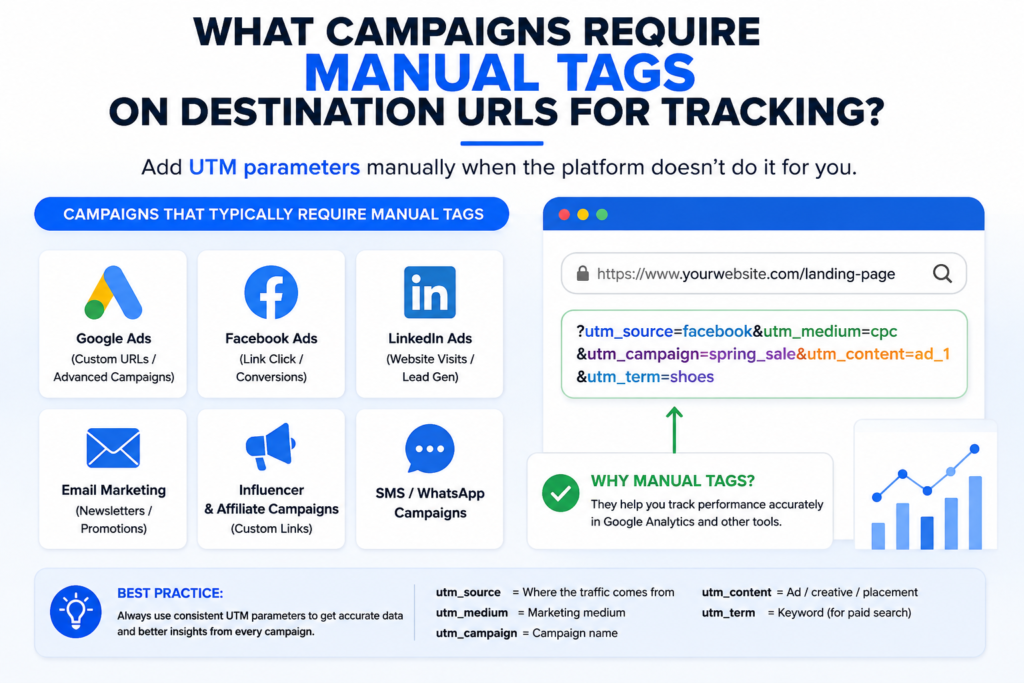
When what campaigns require manual tags on destination URLs for tracking, sharing links on platforms like Facebook, LinkedIn, Instagram, Pinterest, or X, manual tags help distinguish between different social campaigns.
Instead of simply seeing “Social” traffic, you’ll know whether visitors came from:
- Product launches
- Seasonal promotions
- Educational content
- Video campaigns
- Community posts
This level of detail helps identify which content actually drives results. What Campaigns Require Manual Tags on Destination URLs for Tracking
Paid Social Advertising
Although many advertising platforms provide integrations with analytics tools, manual tagging is still considered a best practice.
Paid campaigns often include multiple audiences, creatives, and objectives. URL tags help separate performance across:
- Carousel ads What Campaigns Require Manual Tags on Destination URLs for Tracking
- Video ads
- Lead generation campaigns
- Retargeting campaigns
- Conversion campaigns
Accurate reporting becomes much easier when every destination URL contains campaign identifiers.
Campaigns That Commonly Need Manual URL Tracking What Campaigns Require Manual Tags on Destination URLs for Tracking
Beyond the most common examples, many additional campaign types benefit from manual URL tagging.
Influencer Marketing
Influencers often promote products through various channels. Manual URL tags help determine which creator drives the most traffic and conversions.
Instead of assigning every visit to a generic referral source, marketers can evaluate each influencer individually. What Campaigns Require Manual Tags on Destination URLs for Tracking
Affiliate Marketing
Affiliate partners should always receive unique tagged URLs. This makes commission tracking and campaign evaluation significantly more accurate.
Each affiliate can have their own campaign name or content identifier, making comparisons straightforward.
QR Code Campaigns
Offline marketing continues to grow through QR codes. What Campaigns Require Manual Tags on Destination URLs for Tracking
Examples include:
- Posters
- Business cards
- Restaurant menus
- Product packaging
- Event banners
Without manual tags, QR code traffic is difficult to separate from other visitors. What Campaigns Require Manual Tags on Destination URLs for Tracking
SMS Marketing
Text message campaigns usually don’t provide detailed referral information.
Manual URL tagging helps identify: What Campaigns Require Manual Tags on Destination URLs for Tracking
- Promotional SMS
- Appointment reminders
- Flash sales
- Customer support messages
- Loyalty program offers
Every click can then be analyzed independently.
Campaigns That Usually Don’t Require Manual Tags What Campaigns Require Manual Tags on Destination URLs for Tracking
Not every marketing effort requires manual URL tagging. What Campaigns Require Manual Tags on Destination URLs for Tracking
For example, Google Ads users who have auto-tagging enabled generally don’t need to manually add standard UTM parameters because the advertising platform automatically sends detailed click information into Google Analytics.
Similarly, some integrated advertising platforms automatically pass campaign information when accounts are connected correctly.
However, many experienced marketers still use manual tags alongside automatic tracking for consistency across different reporting tools and marketing platforms. What Campaigns Require Manual Tags on Destination URLs for Tracking
The important point is understanding how your analytics setup works before deciding whether manual tagging is necessary.
Best Practices for Manual URL Tagging
A tagging strategy only works if it’s consistent.
Start by creating standardized naming conventions. Decide how campaign names, traffic sources, and mediums will be written before launching any marketing campaigns. What Campaigns Require Manual Tags on Destination URLs for Tracking
For example, always choose either “facebook” or “Facebook”—never alternate between the two. Consistent naming prevents duplicate reports and keeps analytics clean.
Avoid spaces and special characters whenever possible. Instead, use hyphens or underscores if needed. Clean URLs reduce errors and improve readability.
It’s also wise to maintain a shared spreadsheet where your marketing team stores approved UTM names. This prevents accidental duplicates and ensures everyone follows the same format.
Common Mistakes to Avoid
Many businesses lose valuable tracking data because of simple tagging mistakes.
One common issue is inconsistent capitalization. Analytics platforms may treat “Email” and “email” as separate traffic sources, creating messy reports.
Another mistake is using vague campaign names like “Campaign1” or “Sale.” Months later, these labels become meaningless.
Over-tagging is another problem. Some marketers include unnecessary parameters that make URLs long and difficult to manage without providing useful insights.
Finally, never tag internal website links with campaign parameters. Doing so can overwrite the original traffic source and distort attribution reports.
How Manual Tags Improve Marketing Decisions
Good tracking isn’t just about collecting numbers. It’s about making smarter decisions.
When campaign data is organized correctly, marketers can identify which channels produce the highest-quality visitors rather than simply generating the most clicks.
Manual tags also help optimize advertising budgets. If one campaign consistently converts better than another, spending can be adjusted accordingly.
Customer journey analysis also improves. Businesses gain a clearer understanding of how visitors move from marketing campaigns to purchases, allowing future campaigns to become more effective.
Over time, reliable tracking leads to stronger reporting, better forecasting, and increased confidence when presenting marketing results to clients or company leadership.
Building a Consistent Tracking Strategy
Successful marketers don’t create UTM tags randomly. They build a repeatable process.
Begin by documenting standard values for sources, mediums, campaigns, terms, and content identifiers. Every new campaign should follow these predefined rules.
Review campaign URLs before publishing them. Even a small typo can split reporting into multiple categories, making analysis more complicated than necessary.
Periodically audit your analytics reports to identify inconsistencies. Cleaning up naming conventions early prevents long-term reporting problems and makes historical comparisons much easier.
The more organized your tracking strategy becomes, the more valuable your analytics data will be.
Conclusion
Understanding what campaigns require manual tags on destination URLs for tracking is essential for anyone involved in digital marketing. While some advertising platforms provide automatic tracking, many campaigns—including email marketing, social media promotions, influencer collaborations, affiliate programs, QR code campaigns, and SMS marketing—depend on manual URL tags to provide accurate reporting.
By implementing a consistent tagging strategy, marketers gain a much clearer view of where website visitors come from and how each campaign performs. This leads to better optimization, smarter budget decisions, and more reliable marketing insights.
Ultimately, manual URL tagging is a small step that delivers significant long-term benefits. Whether you’re managing a single campaign or an enterprise-level marketing strategy, accurate tracking ensures every click tells a meaningful story.
You May Read Also: How to Create a Vanity URL in WordPress

