

Introduction
Every successful website goes through continuous EOSE Website Updates improvements, and that’s exactly what keeps it relevant in today’s competitive digital landscape. Whether you’re managing a business website, a blog, or an eCommerce store, simply publishing content isn’t enough anymore. Regular website updates, optimized landing pages, compelling calls-to-action (CTAs), and well-planned marketing campaigns all work together to improve visibility and attract more visitors.
When people search for topics related to EOSE website updates, new pages, CTAs, campaigns, and traffic spikes, they’re usually trying to understand why a website suddenly gains more traffic or how strategic updates contribute to better performance. The answer lies in consistent optimization rather than one single change. EOSE Website Updates
In this guide, we’ll explore how website updates can lead to significant traffic growth, why creating new pages matters, how CTAs influence user behavior, and how marketing campaigns amplify your overall results. By the end, you’ll have a clear understanding of the process that turns ordinary websites into high-performing digital assets.
Understanding EOSE Website Updates
Website updates are much more than changing a few words or refreshing images. They involve improving content, optimizing technical performance, enhancing user experience, and keeping information accurate. Search engines reward websites that continue to provide fresh, valuable content. EOSE Website Updates
One of the biggest reasons businesses update their websites is to remain competitive. User expectations evolve constantly, and outdated information can reduce trust. Fresh content demonstrates that a website is active, maintained, and focused on delivering value to visitors.
Another important aspect is SEO. Search engines frequently crawl websites looking for updated content. While updates alone don’t guarantee higher rankings, meaningful improvements often encourage search engines to revisit your pages more frequently. This can positively impact indexing and visibility over time. EOSE Website Updates
Why Adding New Pages Matters
Creating new pages is one of the most effective strategies for expanding your website’s reach. Every new page creates another opportunity to target relevant keywords, answer user questions, and attract visitors through search engines. EOSE Website Updates
A well-planned website doesn’t rely on just a handful of pages. Instead, it builds a network of helpful resources that cover related topics. For example, a service website may create individual pages for each service, location, case study, or customer guide. This structure helps both users and search engines understand the site’s expertise. EOSE Website Updates
New pages also support internal linking. When pages naturally connect to one another, visitors spend more time exploring the website. This improved engagement sends positive signals while helping users find additional information that matches their interests.
The Importance of Strong CTAs (Calls-to-Action)
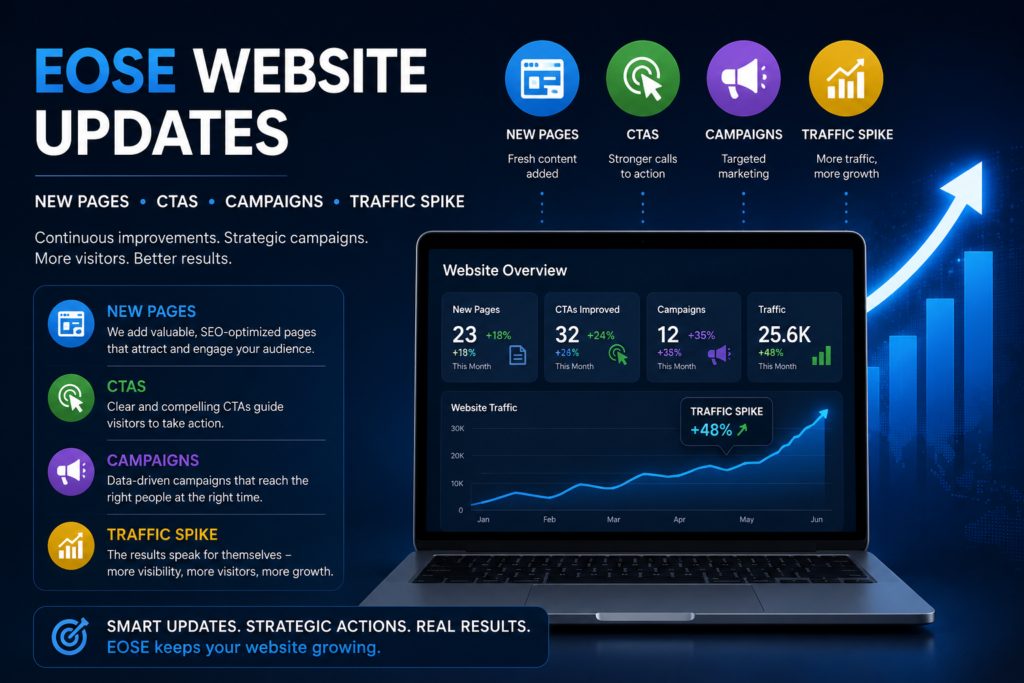
A website EOSE Website Updates without EOSE website updates, new pages, CTAs, campaigns, and traffic spikes effective CTAs is like a store without a cashier. Visitors may browse your content, but they won’t know what action to take next. Calls-to-action guide users toward meaningful interactions.
An effective CTA should be simple, clear, and relevant. Instead of vague phrases, successful websites use action-oriented language that encourages users to download a guide, contact the company, subscribe to a newsletter, request a quote, or explore additional resources.
Placement is equally important. CTAs shouldn’t interrupt the reading experience, but they also shouldn’t be hidden. Many websites strategically place CTAs after informative sections where visitors naturally become interested in learning more. EOSE Website Updates
Well-designed CTAs improve conversion rates because they reduce uncertainty. When visitors know exactly what to do next, they’re more likely to continue interacting with the website. EOSE Website Updates
Marketing Campaigns That Support Website Growth
Website updates become significantly more effective when paired with strategic marketing campaigns. Simply publishing new pages isn’t enough if no one knows they exist.
Digital marketing campaigns can include email marketing, social media promotion, paid advertising, influencer collaborations, and content marketing. Each campaign introduces new audiences to your website while reinforcing your online presence.
Campaigns also create momentum. A successful promotion may generate immediate traffic while encouraging backlinks, social shares, and repeat visits. These secondary effects often continue long after the original campaign has ended. EOSE Website Updates
Businesses that consistently coordinate website improvements with marketing campaigns usually experience steadier growth compared to those relying solely on organic search traffic.
What Causes a Traffic Spike?
A traffic spike refers to a noticeable increase in website visitors over a short period. While sudden traffic growth may seem surprising, it’s usually the result of several factors working together.
One common reason is the publication of valuable content that addresses trending topics. When users actively search for new information, websites with timely content naturally receive more attention. EOSE Website Updates
Another factor is successful SEO improvements. Optimized page titles, better keyword targeting, improved internal linking, and faster loading speeds can gradually increase rankings until a noticeable traffic jump occurs.
Marketing campaigns, social media exposure, email newsletters, and media mentions can also produce dramatic traffic spikes. Often, these sources combine rather than acting independently. EOSE Website Updates
SEO Improvements Behind Website Updates
Search engine optimization remains one of the strongest drivers of long-term traffic. Website updates often include multiple SEO enhancements that improve overall visibility.
Updating outdated content helps maintain relevance. Information changes over time, and keeping articles current increases their usefulness for readers. Search engines prefer content that accurately reflects current information.
Technical improvements also matter. Faster loading pages, mobile-friendly layouts, secure HTTPS connections, optimized images, and clean navigation all contribute to a better user experience.
Keyword optimization is another essential element. Rather than stuffing keywords into content, modern SEO focuses on answering user intent naturally while maintaining readability and authority.
Improving User Experience Through Website Updates
Visitors stay longer on websites that are easy to navigate and visually appealing. User experience directly influences engagement, bounce rates, and conversion performance.
Modern websites prioritize clean layouts, readable typography, responsive design, and intuitive navigation. These elements reduce frustration while helping users find the information they need quickly.
Website updates also include accessibility improvements. Better color contrast, descriptive headings, image alt text, and keyboard-friendly navigation make websites more usable for a wider audience.
When users enjoy their browsing experience, they are more likely to return, share content, and complete desired actions.
Measuring the Success of New Website Pages
Publishing new content is only the beginning. Successful websites continually monitor performance using analytics tools to understand what works best.
Traffic volume is an important metric, but it’s not the only one. Website owners should also evaluate engagement, average session duration, bounce rate, conversions, and click-through rates.
Monitoring keyword rankings helps identify which pages are gaining visibility. If certain topics perform particularly well, they can inspire additional related content that further expands organic reach.
Regular performance analysis allows continuous improvement rather than relying on assumptions.
Common Mistakes That Limit Traffic Growth
Many websites fail to achieve meaningful traffic increases because they focus on quantity instead of quality. Publishing numerous low-value pages rarely produces sustainable results.
Another mistake is ignoring CTAs. Visitors may appreciate useful content but leave without taking any action if there is no clear next step.
Some businesses also launch campaigns without updating their websites first. Marketing efforts are less effective when visitors arrive at outdated or poorly optimized pages.
Finally, neglecting analytics prevents learning. Without measuring performance, it’s difficult to identify successful strategies or correct underperforming areas.
Best Practices for Maintaining Long-Term Growth
Long-term success comes from consistency rather than occasional updates. Websites should establish a regular schedule for reviewing content, improving technical performance, and expanding valuable resources.
Content should always prioritize readers before search engines. Helpful, informative, and trustworthy information naturally earns better engagement and stronger search visibility over time.
Businesses should also continue experimenting with CTAs, page layouts, and marketing campaigns. Small improvements often produce significant cumulative results when implemented consistently.
Finally, maintaining a balance between SEO, user experience, and conversion optimization creates a website that not only attracts visitors but also turns them into loyal customers.
Conclusion
EOSE website updates involving new pages, optimized CTAs, strategic campaigns, and ongoing improvements play a critical role in driving sustainable website growth. Rather than relying on isolated tactics, successful websites combine fresh content, technical optimization, user-focused design, and targeted marketing to increase visibility and engagement.
Traffic spikes rarely happen by accident. They are typically the result of consistent planning, quality content creation, effective SEO practices, and well-executed promotional campaigns. Every new page expands your digital presence, every CTA encourages meaningful interaction, and every campaign introduces your website to new audiences.
As search engines continue evolving, websites that regularly update their content, improve user experience, and focus on delivering genuine value will remain in the strongest position to achieve lasting organic growth. By following these principles, businesses can build a website that not only experiences occasional traffic spikes but also enjoys consistent, long-term success.
You May Read Also:

